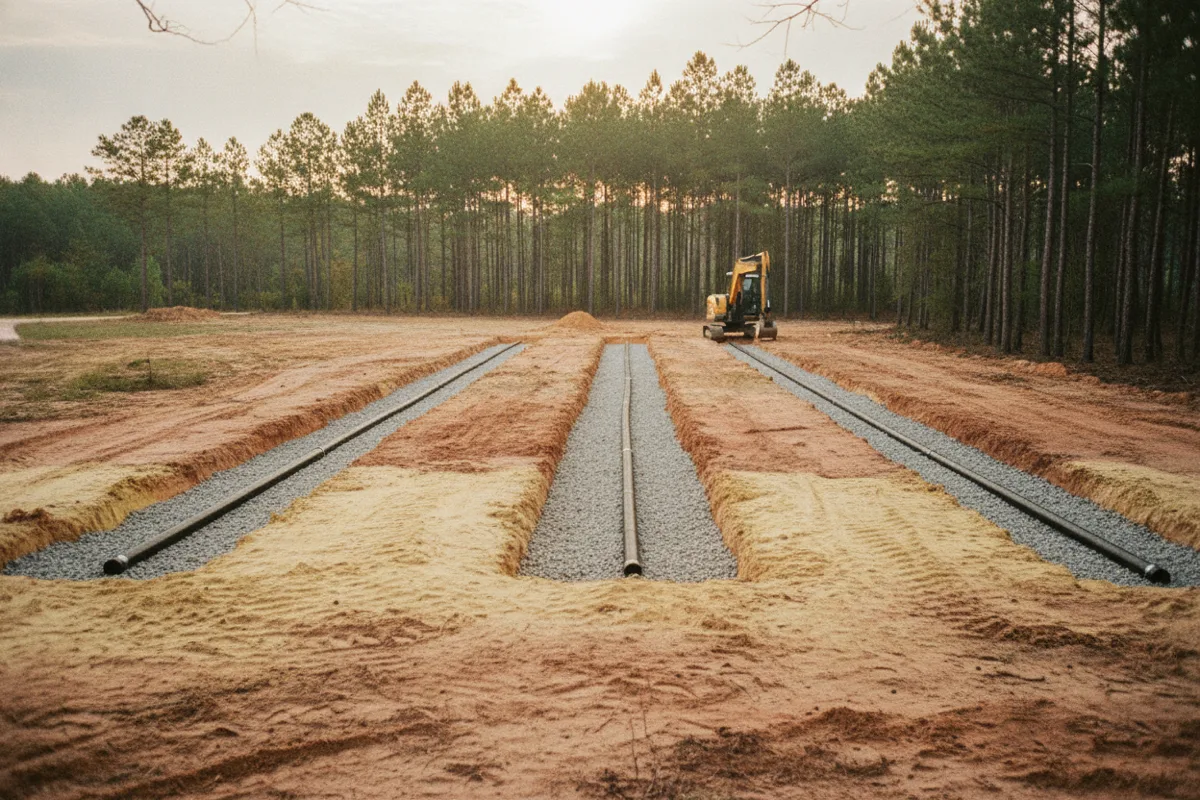
How does a drain field actually work?
Your tank does the easy half of the job. It holds wastewater long enough for solids to sink and grease to float, then lets the liquid in the middle move on.
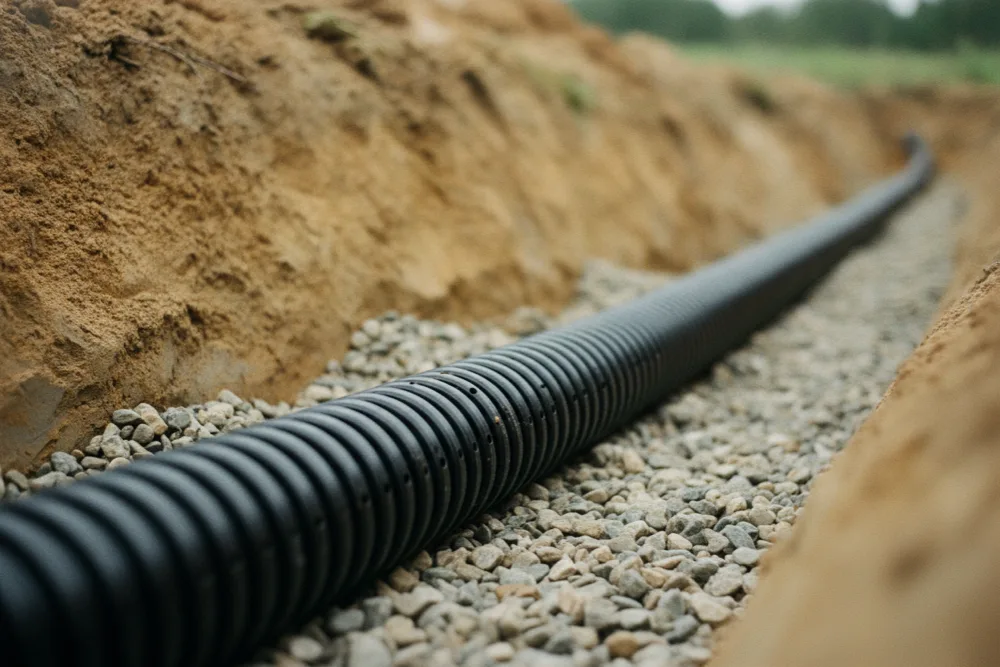
The drain field, also called a leach field, does the hard half. Perforated pipe in gravel trenches spreads that liquid into the soil, and the soil treats it as it filters down. No soil, no treatment.
Wiregrass sandy loam has been good to septic systems for generations because it accepts water readily.
The catch is that treatment depends on a living layer of soil around each trench, and once that layer plugs with solids or stays waterlogged, it quits working. The soil is what fails, not the pipe.
Keeping the tank on schedule is the single best protection for it, which is why staying current on pump outs is really a drain field decision.
What are the warning signs of a failing leach field?
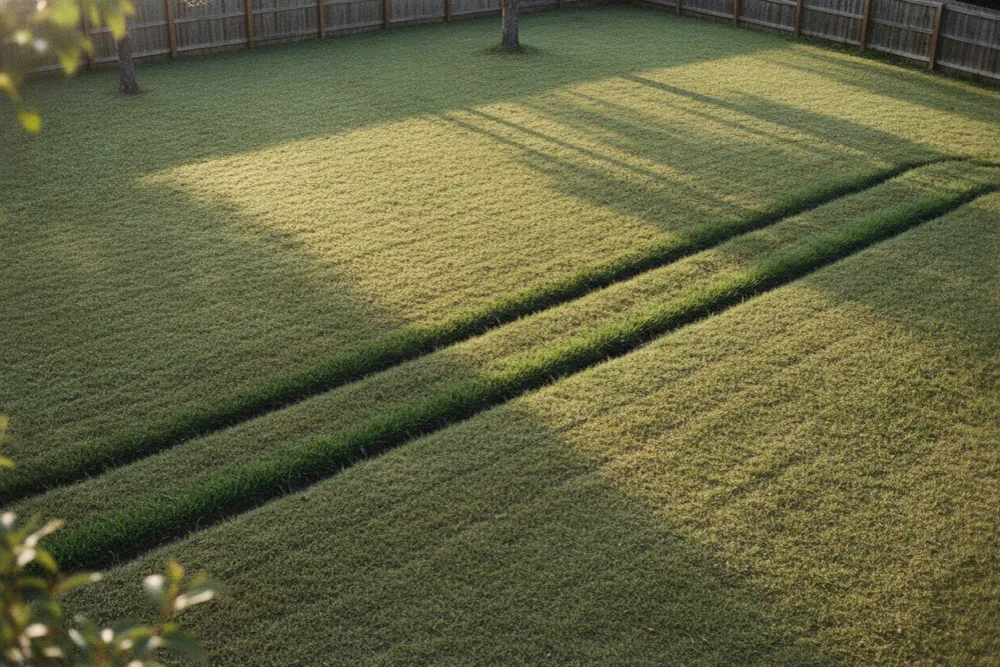
Watch for soggy ground or standing water over the trenches, grass that grows greener and taller in stripes, sewage odor outdoors, and drains that slow again within weeks of a pump out.
Backups inside the house are the late sign, not the early one. By the time sewage returns to a tub, the field has been struggling for months.
In sandy soil, leach field problems often start at one end of the system, where a settled distribution box favors a single trench and overloads it. Catching it there can mean repairing one line instead of rebuilding the whole field, which is a completely different bill.
How much should you budget for drain field repair? Enterprise AL numbers
Targeted drain field repair in southeast Alabama commonly runs about $1,500 to $5,000, and a full replacement field usually starts near $5,000 and climbs from there. A jetting or line cleaning visit sits well below both when the problem gets caught early.
What sets the number:
- How much of the field is affected. One clogged lateral is a very different job than four saturated trenches.
- System size. A 1,000 to 1,500 gallon tank serving a three or four bedroom home implies a field sized to match, and bigger fields cost more to rebuild.
- Access. Trenching needs a machine, and a machine needs a way in past fences, wells, trees and buried utilities.
- Distance and site prep. Rural addresses well off the highway carry more mobilization time.
- Whether a new area has to be permitted, which brings a soil evaluation into the picture.
Any leach field repair cost quoted without a site visit is a guess. Ask for the diagnosis first, then the number.
Can a failing drain field be saved?
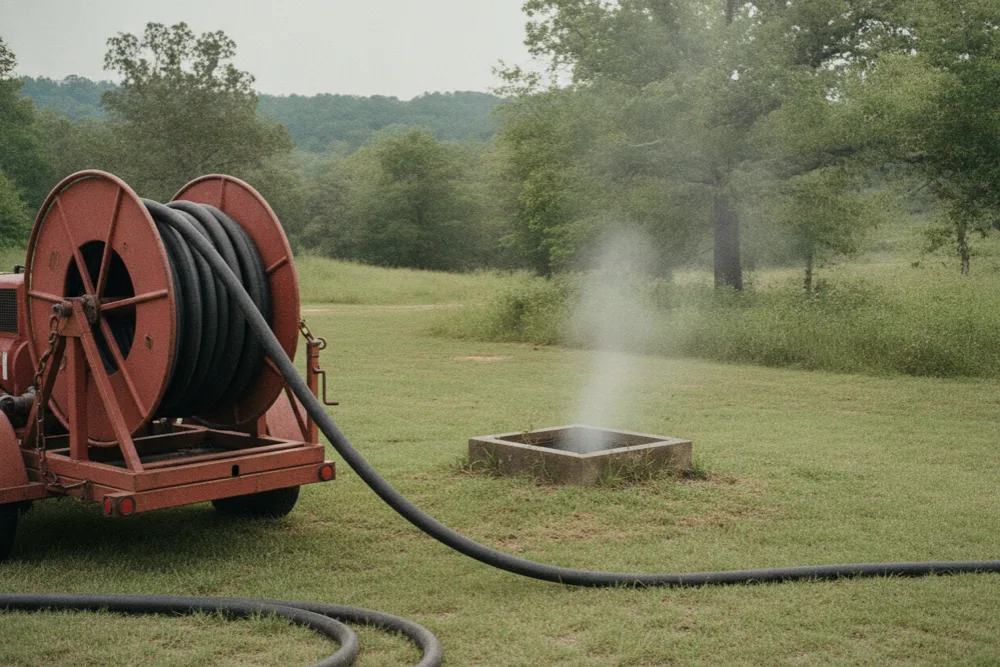
Sometimes, and it is always worth checking before spending replacement money.
Fields that failed because the tank was neglected can occasionally recover once solids stop arriving and the soil gets a long rest. Lines clogged with biomat may respond to hydro jetting.
A tilted distribution box can be leveled so every trench carries its share again. Roots can be cleared, and surface water can be routed away from the trenches.
Fields that failed because the soil itself has sealed, or because the water table sits in the trenches for part of the year, do not come back. Honest diagnosis tells you which one you own, and a full system evaluation is how you find out before you spend.
Skip anything sold in a bottle as a field restorer. Nothing you pour down a toilet rebuilds soil structure.
What does drain field replacement involve?

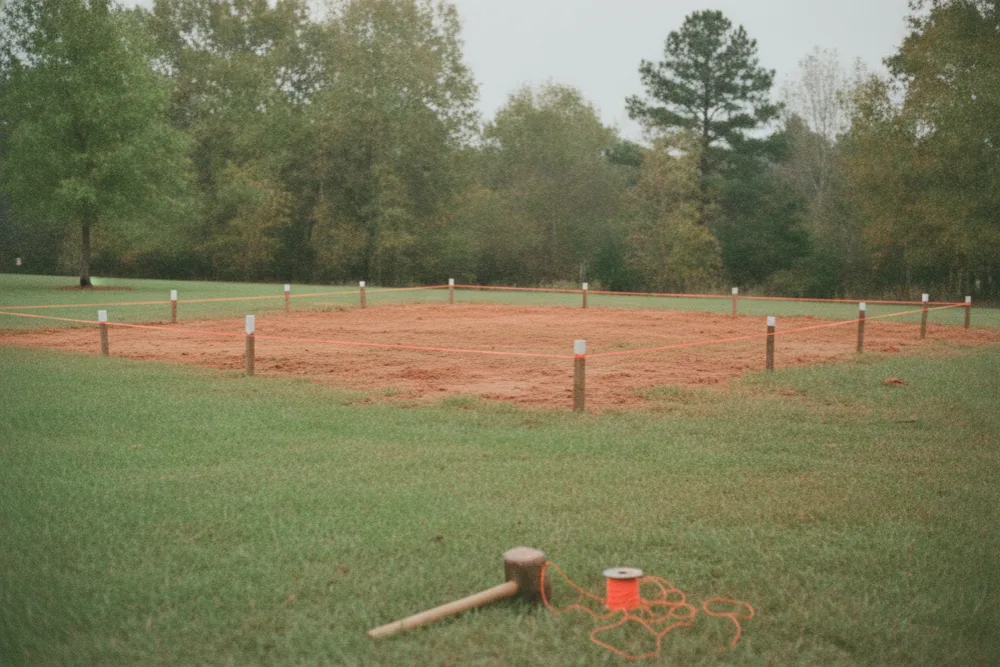
Replacement is a permitted project rather than a repair. Drain field replacement Alabama wide runs through the state health department, which reviews soil and site conditions before a new field is approved. Program details are posted at the ADPH onsite sewage program.
Expect a soil evaluation, a layout that respects setbacks from wells, property lines and structures, and a design sized to the number of bedrooms in the house rather than the number of people living there today.
Lots in the older parts of New Brockton and the farm country around it usually have room for a replacement area. Tighter lots can force an engineered alternative, which costs more and takes longer to get approved.
How do you make a drain field last?

Pump the tank on schedule. Solids that never leave the tank never reach the field, and that one habit does more than everything else combined.
Keep traffic off it. Vehicles, trailers and livestock compact soil and crush shallow pipe. Never build a shed or pour a slab over a field.
Move water away from it. Roof downspouts, gutter discharge and a low spot that ponds after a thunderstorm all add water the field was never designed to handle.
Plant grass, not trees. Willow, sweetgum and river birch roots find trenches from a surprising distance.
Spread laundry across the week, fix running toilets, and skip the garbage disposal.
Homes across Level Plains and that corner of Dale County that stick to these five habits routinely get decades out of one field. That is what good septic drain field service Wiregrass wide is really aiming at.