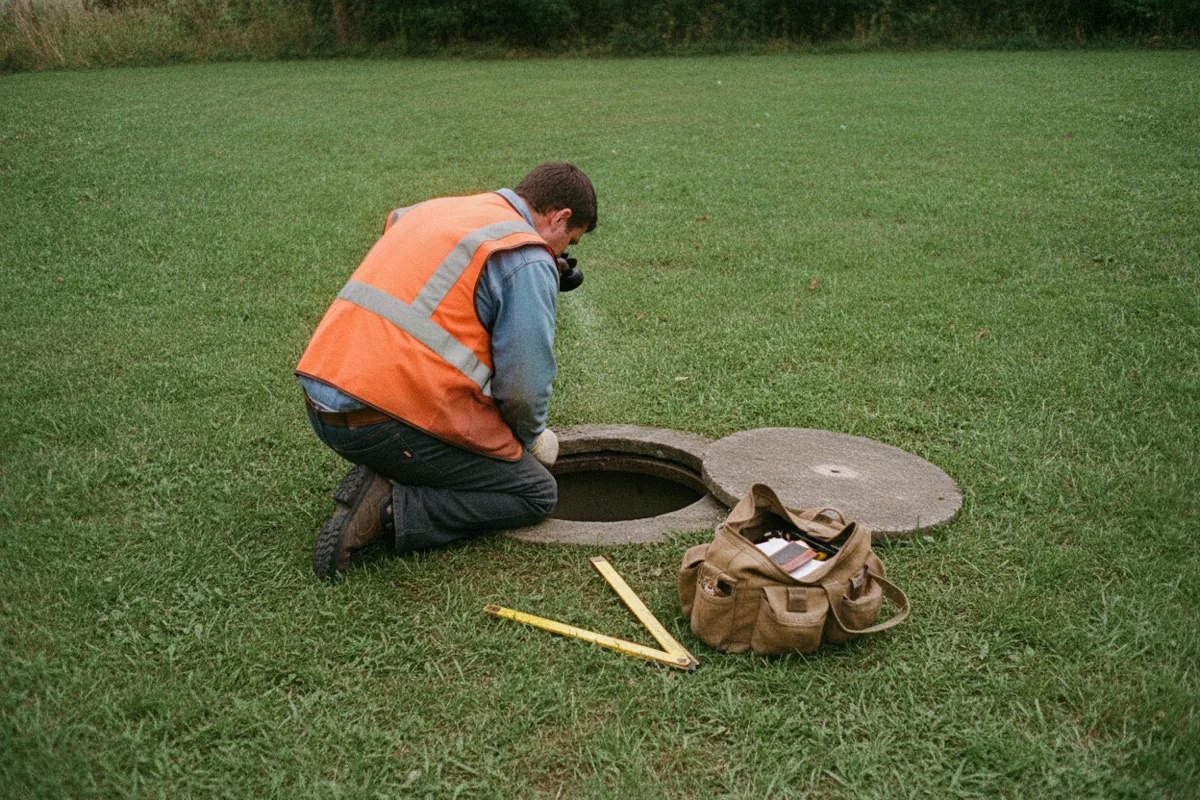
What does a septic inspection include?
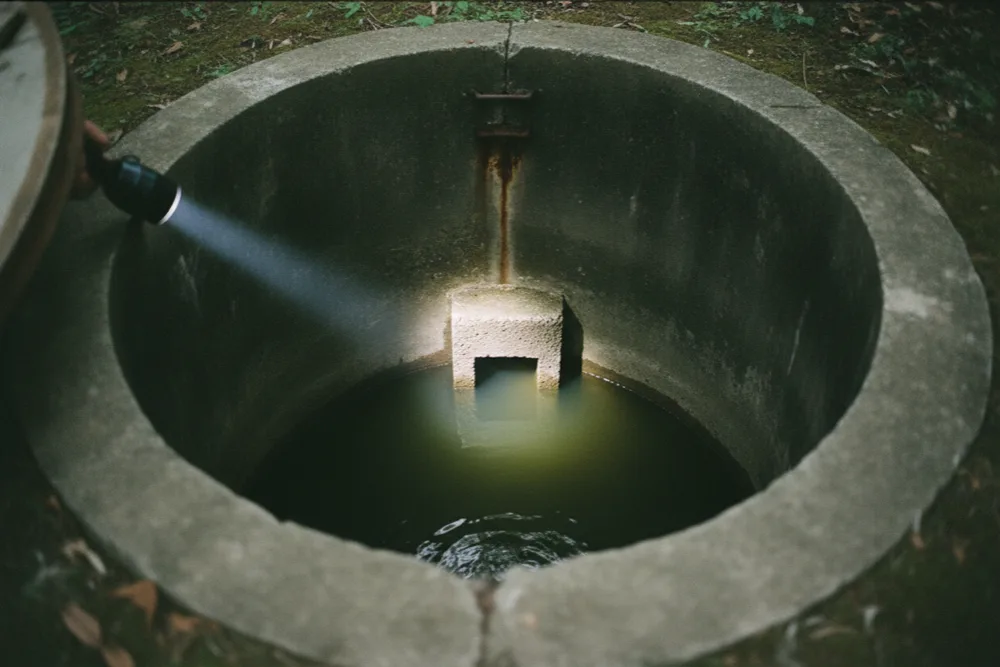
A real inspection is a lot more than a walk across the yard. A thorough visit follows the same sequence every time.
- Locate the tank and uncover the lids, including the outlet side where the useful information lives.
- Measure sludge and scum depth and compare them against the tank volume.
- Check the inlet and outlet baffles or tees for cracks, corrosion and missing pieces that let solids escape.
- Read the liquid level. Water standing above the outlet pipe means the field is not accepting flow.
- Run water through the house to watch how the system handles a normal load.
- Walk the drain field for wet spots, odor, settling and the bright green stripes that mark a saturated trench.
- Look over the tank walls and lids for cracks, root intrusion and safety problems.
You end up with a written report: what was found, photos where they help, and a plain language summary any agent or lender can read without a translator.
Who needs a septic inspection? Enterprise AL buyers, sellers and landlords
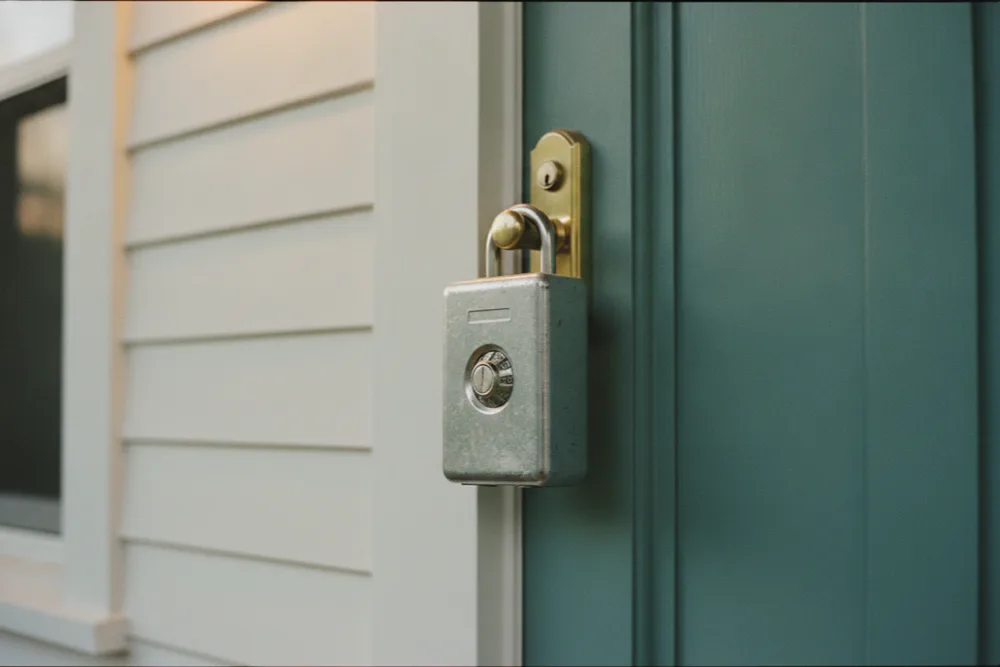
Buyers need one because a failing system is the most expensive surprise a rural property can hide. A pre purchase septic inspection costs a few hundred dollars and regularly saves five figures.
Sellers benefit for the opposite reason. A report in hand before listing removes a bargaining chip and keeps a repair demand from landing in the middle of the option period.
Landlords near Fort Novosel should inspect between tenants. PCS turnover means a house can change hands every couple of years, and an inspection while it sits empty costs less than a backup on move in weekend.
Rentals in Daleville and the towns closest to the gates live on that cycle.
Anyone who has owned the same house for ten years with no service records should get one too. It sets a baseline you can measure against later.
How much does a septic inspection cost in southeast Alabama?

Expect roughly $250 to $500 for a standard inspection, and $450 to $800 when the tank is pumped as part of the same visit. Pumping during the inspection is usually worth it, because an empty tank is the only way to see the floor and the baffles clearly.
What moves septic inspection cost Alabama wide is the same short list as any septic work: tank size, whether the lids have to be dug up, and how far the truck travels.
A property fifteen minutes down Highway 167 prices differently than one three blocks from the middle of town.
Extra charges show up when the tank cannot be located and the yard has to be probed, or when permit records have to be pulled. Give whoever you hire the full address early so records can be checked before anyone arrives.
What makes a septic system fail an inspection?

The two findings that stop the most deals are a missing outlet baffle and a liquid level standing above the outlet pipe. Here is the fuller list, roughly in order of how often it turns up:
- Missing or broken outlet baffle, which lets solids run straight out to the field.
- Liquid level above the outlet, meaning the drain field is already backing up into the tank.
- Standing effluent or soggy ground over the trenches.
- A tank never pumped, with sludge filling a third or more of the volume.
- Cracked or deteriorated lids, which are a real safety hazard on older tanks.
- Downspouts, sump lines or a driveway routed across the drain field.
Not every finding kills a deal. Plenty of them are inexpensive fixes. The point of a real estate septic inspection is to tell you which is which while you still have room to negotiate.
How does Wiregrass ground change the picture?

Soil is the actual treatment plant. The sandy loam across much of the Wiregrass drains readily, which is one reason conventional trench systems have worked here for generations.
Sand that drains too fast has its own risk, since effluent can move before the soil finishes treating it, and that is why trench depth and setbacks were set on the original permit.
Low ground is the other half of the story. Parcels near creek bottoms and river lowlands can sit over a seasonal high water table, so a field that behaves in September may struggle in March. An inspection during a wet stretch tells you more than one during a dry one.
Permits and system records run through the health department. Start at the ADPH onsite sewage program to see what is on file for a given address.
What happens after the inspection?

If everything checks out, keep the report. It becomes the maintenance history the next buyer asks for.
If the report flags solids or a full tank, the fix is usually simple and getting the tank pumped resets the clock.
If it flags the field, that is a bigger conversation and it belongs in the negotiation rather than a phone call after closing. Start with the drain field side of things to understand what the options look like.
Timing matters in a real estate deal. Book the septic system inspection Coffee County agents rely on early in the option period, so there is still room to ask for a repair or a credit.
We schedule around closing dates for buyers and sellers throughout Enterprise and the towns nearby.